
Ronda hits explained: 1, 5 and 10 points
Hits are what make Ronda loud. When someone at the café slaps a card down and the table shouts, it's usually a hit, and often a double one. This guide explains exactly how hits work, how many points they give, and how to use them.
In Darija the three levels have names: ضريبة (daraba, a hit), حبل (hbel, a double hit) and جوج حبال (jouj hbal, a triple hit).
What is a hit?
A hit is a capture of the card the previous player has just played. You hit by playing a card of the same rank, right away, on your turn.
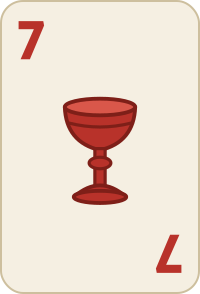
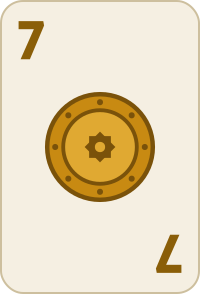
Two things make it a hit, not just a capture:
- The card you take is the one played just before your turn.
- You match its rank (any suit).
Capturing an older card from the center is a normal capture, even if the card just played is collected in the same run. Only taking the card that was just dropped counts as a hit.
The points: 1, then 5, then 10
When players keep hitting the same rank on consecutive turns, the hit climbs:
| Hit in the sequence | Name | Points |
|---|---|---|
| First hit | ضريبة | 1 |
| Second hit, same rank | حبل | 5 |
| Third hit, same rank | جوج حبال | 10 |
Only the last hit in a sequence scores. The points don't add up: a player who makes the second hit gets 5, not 1 + 5. The player who hit first doesn't keep their point if someone hits after them.
The hit stack
When you hit, the cards you capture don't go into your pile straight away. They form a hit stack that stays in the open. If the next player plays the same rank, they take over the whole stack, add their card, and the hit goes up a level.
The stack is banked, its points paid to the last hitter's team, when:
- the next player plays a card of another rank (the sequence breaks),
- the third hit is made (there's no fifth card of a rank, so nothing can follow),
- or the packet ends.
Hits never carry over from one packet to the next: the first card played in a new packet can never be a hit.
Missa inside a hit
If the hit that started the stack also emptied the center, that Missa point travels with the stack and goes to whichever team banks it, unless that team is at 40 points. One more reason to fight for the last hit.
How to set up a double hit
With four cards of each rank, a double hit needs two players to hold the rank. The classic trap is a 1 vs 1 one:
- You hold two cards of a rank, say two 10s.
- You play one 10 and leave it in the center.
- Your opponent hits it for 1 point.
- You hit back with your second 10: a حبل for 5 points, and you take the whole stack.
In 2 vs 2, the player after your opponent is your partner, so it's your partner who can hit back.
The risk: if the next player holds the fourth 10, they make the third hit, a جوج حبال, for 10 points. Before you set the trap, count: if the fourth card of that rank has already been played, your double hit is safe.
Defending against hits
- Don't leave a rank you haven't seen. It's the card most likely to be hit.
- Leave ranks whose other cards are gone. If three 5s have been played, your 5 can't be hit.
- Keep a matching card when you suspect the next player wants to hit: in 1 vs 1, it lets you answer with a double hit. In 2 vs 2, it's your partner who can answer.
- Mind the order of play. In 2 vs 2, the player after you is an opponent and the one after that is your partner. A hit by your partner on an opponent's hit still banks to your team.
Hits and the dealer's last turn
A hit is a capture, so on the dealer's very last turn of the round it counts for the dealer bonus: a hit with a 12 earns the dealer's team 5 points, a hit with a 1 gives 5 to the other team.
Quick recap
- A hit = capturing the card just played, with the same rank.
- 1 point (ضريبة), then 5 (حبل), then 10 (جوج حبال): only the last one scores.
- The hit stack stays open until the sequence breaks, the third hit, or the end of the packet.
- Hits never cross packets.
For more on when to risk a hit, read Ronda strategy: counting, hits and mind games, or check the details in the full rules.