

Declaring Ronda and Tringa, and spotting a hidden one
"Ronda!" is the call that gives the game its name. Calling it at the right moment wins easy points; forgetting it can cost you points if someone notices. This guide covers declaring a Ronda or a Tringa, how the pool is decided, and the art of spotting a combination an opponent kept quiet.
Ronda and Tringa in one minute
- A Ronda is two cards of the same rank in your hand.
- A Tringa is three cards of the same rank in your hand.
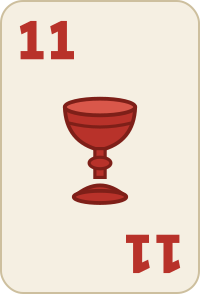
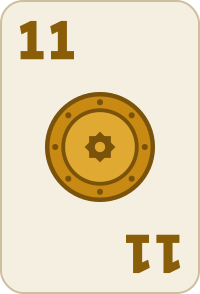
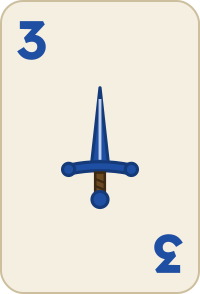
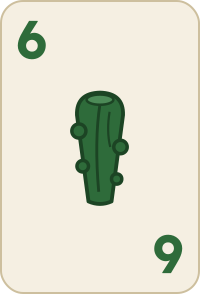
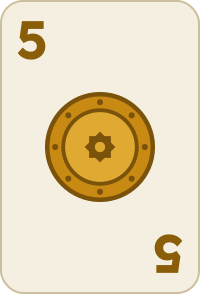
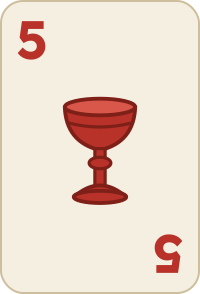
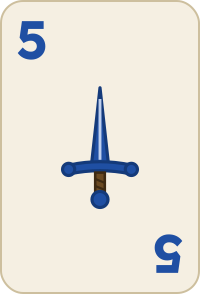
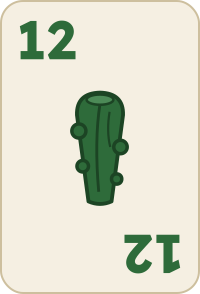
Holding them is not enough. You must declare the combination, and you can only do it while all its cards are still in your hand. Once you play one of them, it's too late for that combination.
When to declare
- Any time during the packet, before you play a card of the combination. In Roonda you can call it even when it's not your turn.
- One declaration per player per packet. If you hold two Rondas, choose one: usually the higher rank (see below).
- Three of a rank can only be a Tringa, not a Ronda. If you held three and already played one, you can still declare a Ronda with the two that are left.
- A player holding all four of a rank holds a Tringa of that rank.
The one deadline that matters is your own first card of the combination. Many lost points come from players who meant to call later and played a card first. When to declare before that deadline is a choice, and a big part of the game: see below.
The pool: who scores
Declarations are settled at the end of each packet. Every declared Ronda adds 1 point and every Tringa 5 points to that packet's pool. The team holding the best combination takes the whole pool.
How "best" is decided:
- A Tringa beats a Ronda.
- Between Rondas, the higher rank wins, unless all four players declared a Ronda: then the lowest wins.
- Between Tringas, the lower rank wins, unless all four players declared a Tringa: then the highest wins.
- Exact tie (same type and rank) between opposing teams: nobody gets the pool that packet. If the tie is between partners, their team wins it.
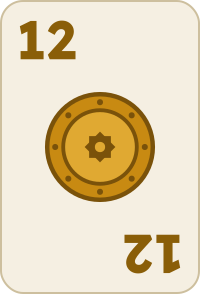
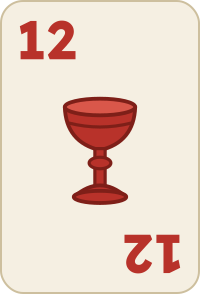
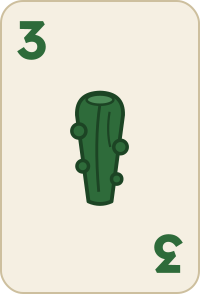
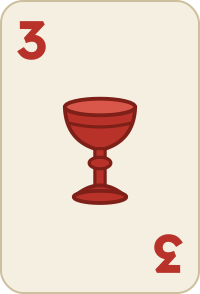
In Roonda, other players see that you declared (Ronda or Tringa) but not which rank, until the pool is paid. Your rank stays your secret until the end of the packet.
Score limits near the end
A team at 39 points or more can no longer declare. That stops a team from finishing the game on pool points alone. If one team is at 39+ and the other is below, the lower team keeps declaring as normal.
Spotting a hidden Ronda or Tringa
Sometimes a player holds a Ronda or a Tringa and doesn't declare it, by mistake or on purpose (to keep the pair for a hit trap). At the end of the packet, during the spot window, the other team can call it out.
- Who may spot: only the team that won the pool in that packet, for either kind. If nobody won the pool (no declaration, or an exact tie), nobody spots. One exception: a team below 39 may spot a team at 39 or more without winning the pool.
- A right spot wins the combination's value: +1 for a Ronda, +5 for a Tringa.
- A wrong spot costs the same: −1 or −5. A score never goes below 0.
- Each opponent can be spotted once per packet per team, and a player who declared can't be spotted.
- If the player held an undeclared Tringa, a Ronda spot on them is still right (+1); a Tringa spot is right too (+5).
In Roonda the spot window lasts 10 seconds at the end of each packet, and it only opens when someone is allowed to spot.
Who to spot
Spotting is a bet based on what you saw during the packet:
- An opponent who played two cards of the same rank in one packet without declaring certainly held a Ronda. That's a safe spot.
- An opponent who played three of a rank held a Tringa: spot it for 5.
- A player who refused an obvious capture or a Missa may be protecting a pair. That's a guess, and guesses cost points when they're wrong.
Declaring as a mind game
A declaration that loses the pool adds a point for the other team, and the others only learn your rank when the pool is paid. So strong players choose their moment:
- A strong Ronda (10, 11, 12): declare early. It probably wins the pool, and winning the pool gives your team the right to spot.
- A weak Ronda: wait. If nobody declares, call it just before playing the first card of the pair.
- Someone declared first: you can keep a weak Ronda quiet so it doesn't feed their pool. But every card is played by the end of the packet, so a counting opponent whose team wins the pool will see your pair and spot it.
- A Tringa: let the others declare their Rondas, then call the Tringa before playing its first card, and take their points.
The full reasoning, with bluffs and timing, is in Ronda strategy: counting, hits and mind games.
Quick recap
- Declare before playing any of the combination's cards; when to do it is part of the game.
- Ronda = 1 to the pool, Tringa = 5; the best combination takes the whole pool.
- Spot only what you saw: a right spot wins the value, a wrong one costs it.
The complete scoring is in the full rules.