

Your first game of Ronda, step by step
The rules of Ronda fit on one page, but they only click once you see them at a table. So instead of a list, this guide plays a whole 1 vs 1 game with you, hand by hand. You sit down against one opponent, and we follow every card of the first round: what each of you plays, what it scores, and why.
You don't need to know anything yet. Each rule is explained the first time it shows up. When you want the complete list, it's on the rules page.
Before the first card
Ronda is played with a 40-card Spanish deck: four suits, and in each suit the ranks 1 to 7, then 10, 11 and 12. There are no 8s or 9s, so in Ronda the rank after 7 is 10. Suits never matter during play: a 7 of cups and a 7 of swords are just two 7s. In the pictures below, the highlighted cards are the ones each step is about.
How a 1 vs 1 game is set up:
- The first dealer is chosen at random. Your opponent deals.
- A round is played in five packets of four cards each. Two players, four cards, five packets: that's 40 cards, so the whole deck is played in every round.
- The player after the dealer starts each packet, and the dealer plays last. So in this round, you always start and your opponent always finishes.
- The center is the open space between you. It's empty when the round starts, and cards left there stay from one packet to the next until someone takes them.
- The first player to reach 41 points wins the game.
Score: you 0, your opponent 0.
Packet 1: four cards and an empty table
Your opponent deals four cards to you, then four to themselves.
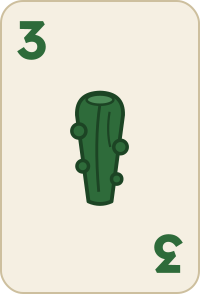
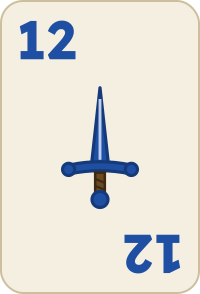
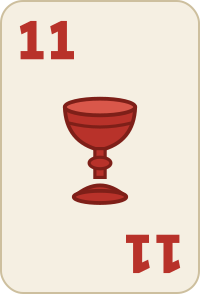
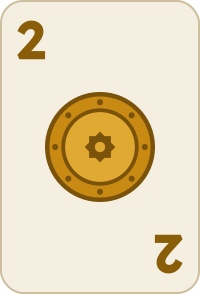
Your first card. On your turn you play one card into the center. If a card of the same rank is already there, you capture it. Here the center is empty, so your card just stays there, and a card left alone is a target. If the next player holds the same rank, they can hit it: take the card that was just played, with a card of its rank. A hit is worth 1 point.
With no information at all, any card is a guess, so you simply play the 3. Your opponent has no 3 and plays an 11.
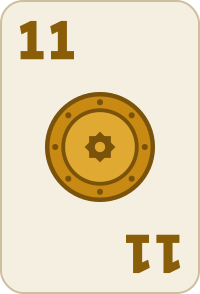
Hit now, or wait? A hit gives you a point, but it can be answered. If your opponent holds another 11, they take your hit back with a double hit, worth 5. In the first packet you know nothing about the other 11s, so you wait. You play your 12 next to their 11: if that 11 is still there on your next turn, your 11 can take it, and the 12 with it. Your opponent plays a 2.
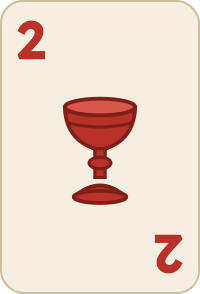
Your first capture, with a run. When you capture a card, you also take every center card that continues upward in rank from it, without a gap. That's the run, and it isn't optional: the whole run is always taken. Your 11 matches their 11, so you take it, then the 12 above it. Three cards go into your pile.
This was not a hit, because their 11 wasn't the card just played (the 2 was). That's good for you: a double hit can only follow a hit, so nobody can take these cards back.
Your opponent plays a 4. The center now holds a 3, a 2 and a 4.
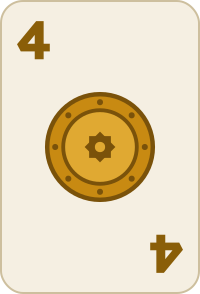
A Missa. Your 2 matches their 2, and the run climbs to the 3, then the 4. There's no 5, so it stops there. The center is now empty, and a capture that empties the center scores a Missa: 1 point.
Notice that the 4 your opponent just played came with the run, and it's still not a hit. You matched the 2, an older card. A hit means matching the card just played with its own rank.
Your opponent, the dealer, plays the last card of the packet: a 10, into the empty center. It's safe there, because hits never carry over from one packet to the next. The first card of the next packet can't hit it.
Score: you 1, your opponent 0.
Packet 2: the 7 that was a trap
Your opponent deals four new cards each. The center still holds their 10.
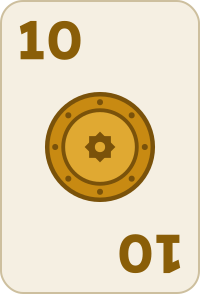
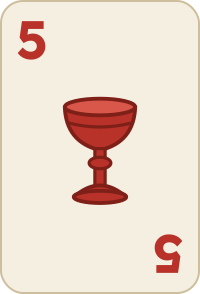
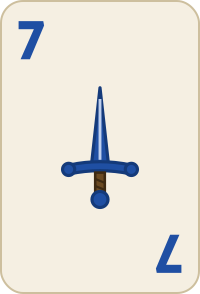
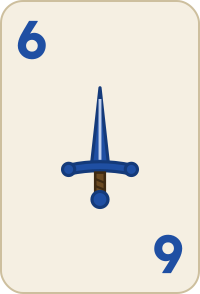
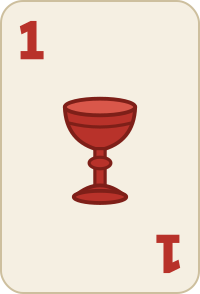
You can't capture, so you play the 5. Your opponent answers with a 7, right next to their 10.
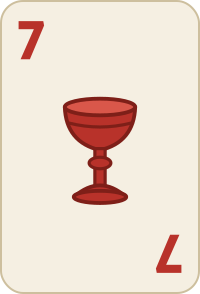
That 7 looks like a gift. Your 7 matches it, and since the rank after 7 is 10, the run takes the 10 as well. It's also a hit, because their 7 was the card just played. Three cards and a point: you take it.
A hit doesn't go to your pile straight away. The cards form an open hit stack, and the next player can take it over by hitting the same rank again. Your opponent does exactly that.
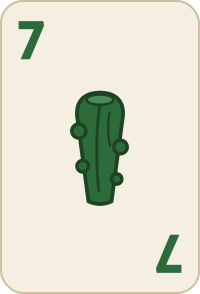
Your opponent held two 7s. They left one in the center as bait, you hit it, and they answered with the other: a double hit. Only the last hit of a sequence scores, so your point is gone, and they take all four cards. A third hit on the same rank would be worth 10, but it would need the fourth 7, and you don't have it.
You play your 6. It isn't a 7, so the hit sequence is over and your opponent's stack is banked: 5 points and four cards for them. The packet ends quietly. Your opponent plays a 12, you play a 1, and your opponent finishes with a 3.
One more thing: two cards of the same rank in your hand are a Ronda, and your opponent never declared their 7s. Here it costs them nothing. Only the player who wins the packet's Ronda pool may call out a hidden one, and nobody declared anything this packet, so nobody won the pool.
Score: you 1, your opponent 5.
Packet 3: your first Ronda, and a spot
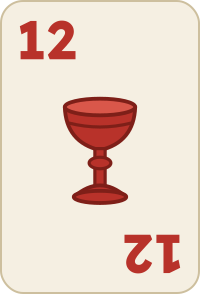
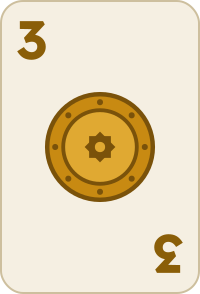
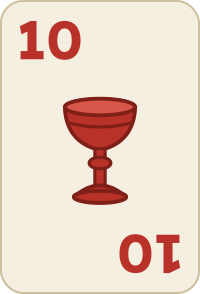
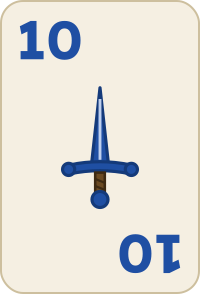
Now it's your turn to hold a pair. A Ronda only counts if you declare it, by calling "Ronda!", before you play either of its cards. Each declared Ronda adds 1 point to the packet's pool, and at the end of the packet the best combination takes the whole pool. Between two Rondas, the higher rank wins, so a pair of 10s is a strong one. You declare it right away. Your opponent sees that you called a Ronda, but not which rank.
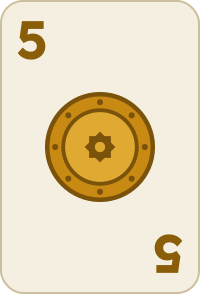
Your 5 takes the 5 and the 6 above it (there's no 7, so the run stops). Your opponent plays a 4.
Next, you use your pair the way your opponent used theirs: you play one 10 into the center as bait. You can count the risk. One 10 is in your opponent's pile from their double hit, you hold two, so only one is still unseen. If your opponent hits your 10, your second 10 answers with a double hit, and nobody can answer that.
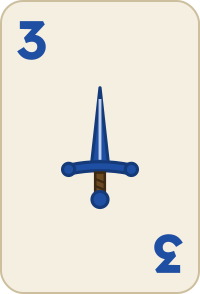
Your opponent doesn't bite. They play their own second 4, which takes their first one (a card that matches the center must capture). Your second 10 then collects your first. Your opponent's 1 takes the 1, your 3 takes the 3, and your opponent ends the packet with an 11. A 12 and an 11 are left in the center.
The pool. You were the only one to declare, so the pool is yours: 1 point.
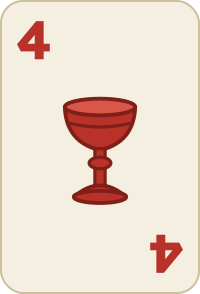
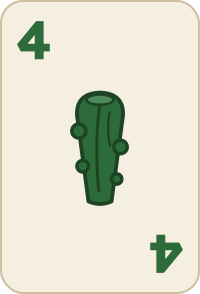
The spot. Nobody gets new cards in the middle of a packet, so your opponent held both of those 4s from the deal. That's a Ronda they didn't declare. They kept quiet on purpose: their 4s would lose to your 10s and only add a point to your pool.
But at the end of each packet, the player who won the pool may spot an opponent's undeclared Ronda or Tringa. You won the pool and you saw both 4s, so you spot them: 1 more point. A wrong spot would have cost you 1, so only spot what you have actually seen.
Score: you 3, your opponent 5.
Packet 4: cards nobody can hit
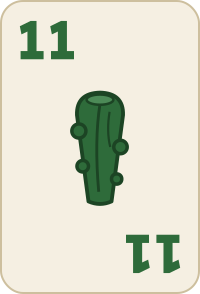
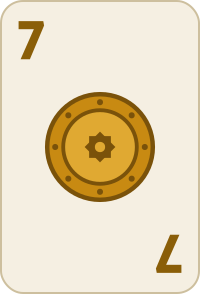
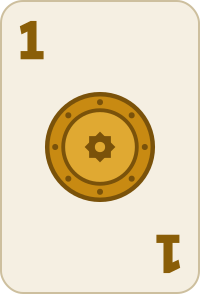
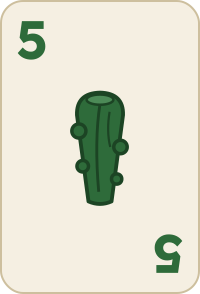
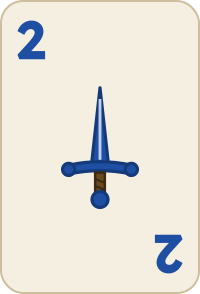
Twenty-four of the 40 cards have been played, and that changes the game: now you can count. Your opponent's double hit put three 7s in their pile, so your 7 is the last one, and nobody can hit it. You lead with it.
Your opponent's 11 takes the 11, and the 12 by run. Then you both play careful cards: your 1, their 10 (the last 10), your 5. Your opponent plays a 2.
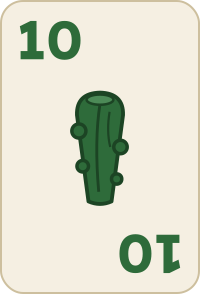
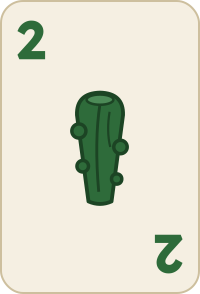
Two 2s went into your pile with your Missa in the first packet. Your opponent just played the third, and you hold the fourth. So if you hit, they have no answer. You hit, and the stack is banked when your opponent plays their last card, a 6: 1 point for you.
Packet 4 ends with five cards in the center: a 7, a 1, a 10, a 5 and a 6.
Score: you 4, your opponent 5.
Packet 5: the dealer's last card
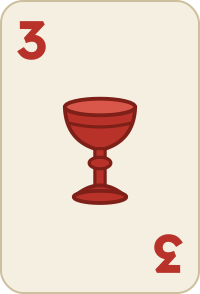
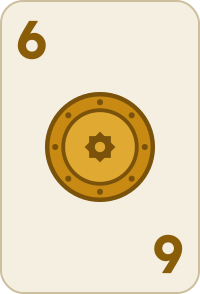
The last packet. Before playing, your opponent declares a Ronda. You don't know its rank yet.
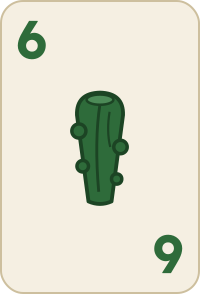
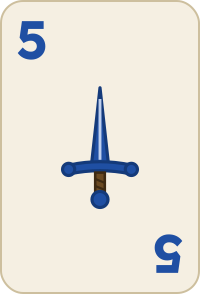
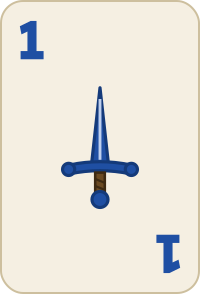
Your 5 matches the 5, and the run goes 6, 7, then 10, because there are no 8s or 9s. Five cards in one move. Your opponent plays a 12, your 1 takes the 1, and your opponent plays a 4. Two cards each are left.
You can name your opponent's cards. In the last packet, every card you haven't seen must be in the dealer's hand. Count them all: the piles, the center, your own hand. Only two cards are missing, the last 6 and the last 12. So their Ronda is a pair of 12s: one is in the center, the other in their hand, and since every other 12 and 11 is gone, nothing can stop their last card from taking it.
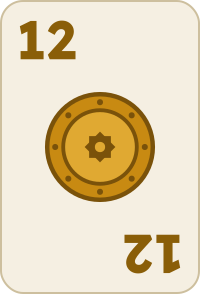
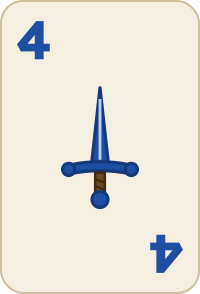
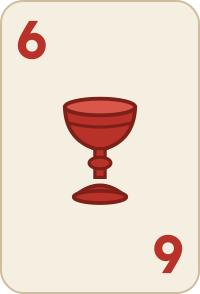
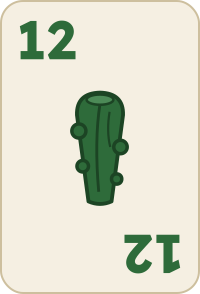
Knowing that, you play your 3, the last 3, which nobody can take. If you played the 6, your opponent would hit it. Your opponent keeps their 12 for the end, so they must play the 6, and you hit it with yours, the last 6. Again, no answer is possible.
The dealer's last turn is the last turn of the round, and it has its own scoring:
| The dealer's last card | Result |
|---|---|
| captures with a 12 | the dealer scores 5 |
| captures with a 1 | the other player scores 5 |
| captures with a 2 to 11 | no bonus |
| captures nothing | the other player scores 5 |
Your opponent plays their 12. It isn't a 6, so your hit stack is banked first: 1 point for you. Then their 12 takes the 12.
The packet is over, and the round ends in a fixed order.
The pool. Your opponent's Ronda of 12s was the only call of the packet, so they take the pool: 1 point. They could now spot you, but you held no pair.
The dealer's bonus. Your opponent's last capture was made with a 12, so they score 5.
The leftovers. Two cards are still in the center, a 4 and a 3: Moroccan players call them القاعة. After the dealer's last turn, they go to whoever made the last capture of the round, here your opponent. If their 12 had missed, they would have gone to you, since your hit on the 6 was the capture just before their turn, and the 5 points would have been yours instead.
Counting the round
All 40 cards are now in the two piles. The last thing to score is the card points (ماكلة): the player with more cards scores their total minus 20. You captured 25 cards and your opponent 15, so you score 25 minus 20 = 5. With 20 each, nobody would score.
Here is the whole first round:
| Where the points came from | You | Opponent |
|---|---|---|
| Missa (packet 1) | 1 | 0 |
| Hits | 2 | 5 |
| Ronda pool | 1 | 1 |
| Spot | 1 | 0 |
| Dealer's last card | 0 | 5 |
| Card points (25 to 15) | 5 | 0 |
| Round total | 10 | 11 |
Your opponent leads by one point. Their points came from two big, planned moments: the 7 trap and the 12 they kept for their last card. Yours came from many small ones and a lot of cards. Both ways work, and good players use both.
The race to 41
Scores carry over from round to round until someone reaches 41. In the next round the deal passes to you, so your opponent starts every packet and your last card is the one that counts. The deal keeps alternating after that.
| After round | You | Opponent |
|---|---|---|
| 1 | 10 | 11 |
| 2 | 24 | 20 |
| 3 | 38 | 37 |
| 4 | 45, you win | 40 |
Round 4, your deal, is where the end-of-game limits come in:
- Packet 1. Your opponent leaves a card, you hit it and they can't answer: you have 39. From now on you can't declare a Ronda or a Tringa. Without this limit, a team near the end could finish on pool points alone.
- Packet 2. You're dealt two 11s, and you can't declare them. Your opponent, still below 39, may spot a player at 39 or more even without winning a pool. You have to play both 11s, they see them, and they spot you: your opponent 38.
- Packet 3. Your opponent's capture empties the center: Missa, and they have 39 too. With both players at 39 or more, nobody can declare or spot anymore.
- Packet 4. You take the last card in the center: Missa, and you have 40. That was your last possible Missa: a player at 40 can't score one.
- Packet 5. Your opponent hits a card you left: 40 each. Neither of you can score a Missa now, so the game will be decided by something bigger.
It comes down to your last card, as the dealer. Two 12s were captured earlier in the round. Your opponent had to play the third one in this packet, and it's still in the center. You kept the fourth.
Your 12 captures: 5 points, 45 in all. The game ends the moment a player reaches 41, so the cards aren't even counted. Had your last card captured nothing, those 5 points would have gone to your opponent, and they would have won.
What to practise next
You've now seen every rule in action. Here is what to work on, one habit at a time:
- Ask before every card you leave: can the next player hit this? Count how many of its rank you've seen. Ronda card counting drills builds this habit in small steps.
- Hit when it's safe, not every time. Holding the last card of a rank, or answering with a pair, is safe. A blind hit in the first packet isn't. See Ronda hits explained.
- Declare before you play. Make "Ronda!" a reflex the moment you see a pair, then learn when waiting pays in Declaring Ronda and Tringa.
- Plan the dealer's last card a few packets early, like your opponent did. The dealer's last capture explains the counting behind it.
- Know where every point comes from: How Ronda scoring works counts them all, and 10 Ronda beginner mistakes shows the habits that cost new players the most.
The quickest way to learn is to play many hands. The Easy bot is a calm first opponent with no turn timer, and the app's tutorial walks you through a guided first hand. When you're ready, play Ronda online.