
10 Ronda beginner mistakes, and how to avoid them
Every Ronda player starts the same way: matching cards, hoping for the best, and wondering why the old man across the table is always ahead. Most lost games don't come from bad cards. They come from a handful of habits that are easy to fix once you can see them.
Here are ten common ones, and how to fix each. If you're still learning how the game works, read the full rules first.
1. Not counting anything
The biggest mistake is treating the cards as a surprise. Ronda uses 40 cards, four of each rank, and all of them get played. A beginner sees a 5 and thinks "a 5". A good player sees a 5 and thinks "that's the third 5".
The fix: you don't need a perfect memory. Pick the ranks in your hand and follow only those. "I hold a 10, and two 10s are gone" is already enough to change your next move. Add more ranks as it gets easier.
2. Dropping a card without thinking about the next player
When your card captures nothing, it stays in the center. The next player can hit it with the same rank and score. Beginners drop whichever card they like least. Good players drop the card that is hardest to hit.
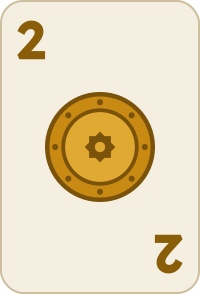
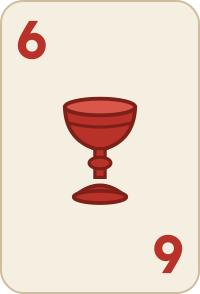
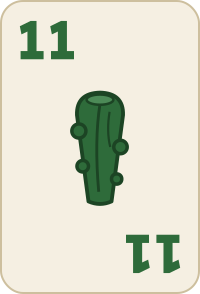
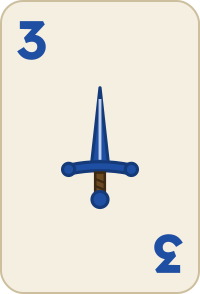
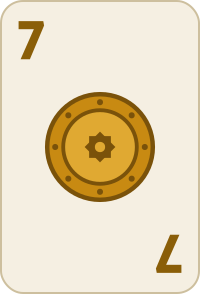
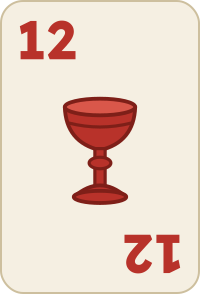
The fix: before you leave a card, ask how many of its rank you've seen. Three gone means nobody can hit it.
3. Hitting every card in the first packet
A hit feels great: you take a card and score right away. But a first hit is only worth 1 point, and the next player can hit the same rank for 5, and the one after for 10. Only the last hit scores, so your point disappears and the other team takes the whole stack.
The first packet is the worst time to gamble, because you've seen almost nothing.
The fix: in the first packet, hit only when you have a reason to feel safe, like holding two cards of that rank. Later on, let the count decide: if you hold the last card of a rank, hit without thinking twice. Ronda hits explained goes through it step by step.
4. Forgetting how runs work
Two run rules catch new players out.
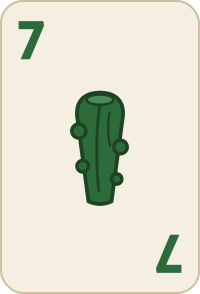
First, the 7 is followed by the 10. There are no 8s or 9s in the deck, so a run can jump straight from 7 to 10.
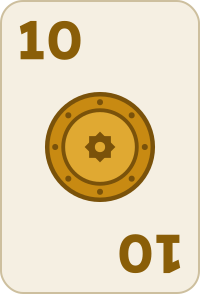
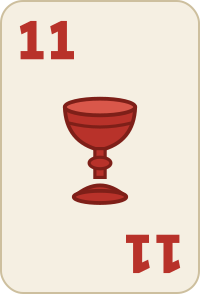
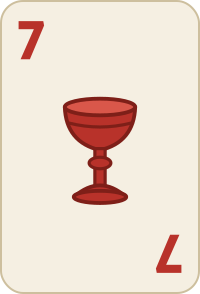
Second, you don't get to choose. If your card matches the center, you must capture, and you take the whole run. Runs go by rank, not by where the cards sit on the table. So a capture can carry away a card you wanted to leave there, or empty a center you wanted to keep.
The fix: before playing, look at what your card will really take, not just the card it matches.
5. Forgetting to declare
You hold two 6s, you're thinking about hits, you play a 6, and your Ronda is gone. Holding a pair scores nothing. You have to declare it, and you can only do that while every card of the combination is still in your hand.
Online there's a second trap: when the turn timer runs out, the first card in your hand is played for you. If that card belongs to your pair, the declaration is lost with it.
The fix: make it a habit. Each time a new packet is dealt, look for a pair or three of a kind before you do anything else. The details are in Declaring Ronda and Tringa.
6. Declaring a weak Ronda straight away
A declaration doesn't just score: it adds to the packet's pool, and the best combination takes the whole pool. If you call a Ronda of 2s and someone else declares a Ronda of 11s, your point goes straight to them.
It helps to remember which combination wins, because beginners often mix this up:
| Combination | Which one wins |
|---|---|
| Tringa v Ronda | the Tringa, always |
| Ronda v Ronda | the higher rank |
| Tringa v Tringa | the lower rank |
There's one rare exception, when all four players declare the same type: then the order flips.
The fix: declare a strong Ronda (10, 11 or 12) early. With a weak one, wait: if nobody else declares, call it just before you play the first card of the pair.
7. Spotting on a hunch
Spotting an undeclared Ronda or Tringa earns 1 or 5 points. A wrong spot costs the same amount. New players spot because an opponent "looked nervous". That's a coin flip with your own points.
The fix: only spot what you saw. If a player who didn't declare played two cards of the same rank in the packet, they held a Ronda, and when you're allowed to spot, that's a sure point. If you didn't see it, leave it.
8. Counting a Missa too early
Missa is 1 point for emptying the center with a capture. It's a nice point, but it has a catch: if your capture is also a hit, the Missa doesn't pay straight away. It travels with the hit stack and goes to whichever team banks it. If the next player hits back, they take your Missa along with the cards.
A plain Missa has a cost too. The center is now empty, so the next card played sits there alone, and the fight starts again.
The fix: take the cheap Missas, but check whether the capture is a hit that can be answered. How Ronda scoring works covers every point in the game.
9. Ignoring the dealer's last turn
The dealer's very last turn of the round is worth 5 points:
- capture with a 12: the dealer's team scores 5,
- capture with a 1, or no capture at all: the other team scores 5.
Beginners only notice this when it happens. Stronger players think about it from the first packet, because every card left in the center or taken away changes what the last card can do. Whoever captures last also takes the cards left in the center, which adds to the card count.
The fix: when you're the dealer, think about your last card early. When the other team deals, try to leave them nothing to capture. The dealer's last capture shows how.
10. Forgetting the limits near 41
The end of a game has its own rules, and they surprise people every time:
- at 39 points or more, your team can't declare a Ronda or Tringa,
- at 40 points, your team can't score a Missa.
So a team on 40 can't just sweep the center to win. It needs a hit, the dealer bonus or card points.
The fix: look at the score before you plan your turn. If you're behind, these limits buy you time.
How to stop making them
You don't need to fix all ten at once. Pick one per session:
- Start with declaring: it's free points and needs no counting.
- Then work on what you leave, and stop giving away hits.
- Then start counting one or two ranks per packet.
The Easy bot is a good place to practise, because it won't punish you much. Move to Normal once you stop giving away hits, then try real players.
For the next step, read Ronda strategy: counting, hits and mind games, or put this into practice and play Ronda online.