
Darija Ronda glossary: the words of the table
At a Ronda table in Morocco, you hear the game as much as you see it. Players call "Ronda!", count a hit out loud and argue over who takes the last cards in the center. If you learned the rules in English or French, the Darija words are often the hardest part to follow.
This glossary collects the words players use at the table, grouped by what they're about. Each one comes with its Arabic spelling, a Latin spelling you can read aloud, what it means, and when you'll hear it.
How to read the words
- The bold word is the Darija spelling, in Arabic script, the way Moroccans write it when they text. It reads right to left.
- The italic word is one way to write it in Latin letters. Darija has no official Latin spelling, so you'll meet others. Moroccans often use numbers for sounds Latin letters don't have, like the 3 in qa3a for the letter ع.
- Scores are written with the same digits as in English: 41, 5, 10.
- A few words are borrowed. The 12, for example, often goes by its Spanish name, el rey.
Calls you announce
These are the words you say yourself, out loud, during a packet or right after it.
- روندا! (ronda!): "I have a Ronda", two cards of the same rank in your hand. You call it before you play either card of the pair; once one is on the table, it's too late. A declared Ronda adds 1 point to the packet's pool. Without the exclamation, روندا is also the name of the game.
- ترينكا (tringa): three cards of the same rank in your hand. You call it the same way, before playing any of the three. A Tringa adds 5 points to the pool and beats any Ronda. Three cards of a rank can only be declared as a Tringa, never as a Ronda.
- حصل (hsel): to spot, or catch, a player who held a Ronda or Tringa and kept quiet. It happens at the end of the packet. Only the team that won the pool may spot, with one exception: when the other team is at 39 points or more and yours isn't, your team may spot them anyway. A correct spot earns the value of the hidden combination (1 point for a Ronda, 5 for a Tringa); a wrong one costs the same.
The best combination of the packet takes the whole pool, so a call isn't only about your own point. In Roonda, other players see that you declared, not which rank, until the pool is paid.
Hits and scoring
Hits are the loudest moment of the game, and they have their own words. They climb in three steps.
- ضريبة (daraba): a hit. You take the card the previous player has just played, with a card of the same rank, on your turn. Worth 1 point.
- حبل (hbel): a double hit. The next player hits the same rank again and takes everything. Worth 5 points.
- جوج حبال (jouj hbal): a triple hit, the third hit in a row on one rank. Worth 10 points. A rank has only four cards, so nobody can answer it.
- ميسا (missa): 1 point for a capture that leaves the center empty. A team on 40 points can't score it. If the capture was a hit, the Missa travels with the hit stack and goes to the team that banks it.
- بونت (bount): a point. The first team to 41 wins.
- ماكلة (makla): card points, counted at the end of each round. The team with more captured cards scores its total minus 20, so 24 cards make 4 points.
The points never add up: the player who makes the حبل gets 5, not 1 plus 5, and the first hitter keeps nothing. Ronda hits explained covers when a hit is worth the risk.
The table and the deal
- القاعة (l-qa3a): the center, the shared space where cards are played face up. It's empty at the start of each round. At the end of the round, القاعة also means the cards still left there after the dealer's last turn: they go to the team that made the last capture.
- كارطة (karta): a card.
- كلا (kla): to capture. You play a card of the same rank as a card in the center and take it, with the run that follows it. "Your 7 takes" is 7 ديالك كتاكل (7 dyalek katakol).
- طرح (terh): a packet, one deal of cards. In 1 vs 1, a round has five packets of 4 cards each. In 2 vs 2, it has three: 4 cards, then 3, then 3.
- تفريقة (tfriqa): a round, one full play through the 40-card deck, with card points counted at the end.
- مول قاعة (moul qa3a): the dealer, who deals and plays last in every packet. The dealer's last turn of the round matters: a capture with a 12 gives the dealer's team 5 points, while a capture with a 1, or no capture at all, gives 5 to the other team.
- الرّي (el rey): the 12, by its Spanish name, and the card a dealer most wants for that last capture.
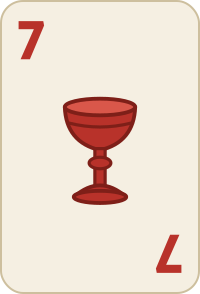
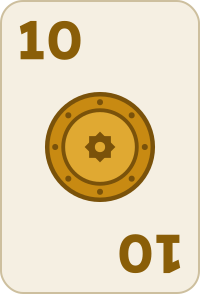
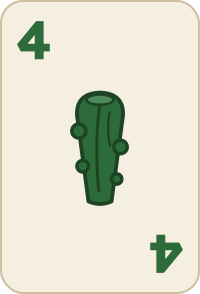
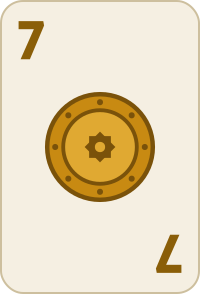
Players and teams
- الفرقة (l-ferqa): the team. In 2 vs 2, partners sit opposite each other and share one score.
- صاحبك (sahbek): your partner. Your partner's hit, Missa or winning Ronda counts for your team.
- حنا / هوما (hna / homa): us / them, the two sides of the score.
- نوبتك (noubtek): your turn. In Roonda, a turn lasts 20 seconds in casual games. When time runs out, the first card in your hand is played for you.
A packet in Darija
Here is one packet of a 2 vs 2 game, told with the words above. Youssef and Nadia play against Salma and Karim.
- Karim is مول قاعة for this تفريقة, so he plays last in every طرح. The first packet is dealt: 4 cards each.
- Youssef holds two 11s. Before playing either, he calls روندا!
- Youssef plays a 5 that matches nothing. Salma answers with a 5: a ضريبة.
- Nadia, Youssef's partner, holds the third 5. She hits back: a حبل. Karim has no 5 and plays another rank, so the stack is banked: 5 points for Youssef and Nadia, "for حنا", as Youssef would say.
- On a later turn, Salma takes the last two cards in القاعة: a ميسا, 1 point for her team.
- At the end of the packet, Youssef's Ronda is the only call, so his team wins the pool. Nadia saw Salma play two 6s without a word. Her team won the pool, so she can حصل, and she's right: 1 more point.
- Two packets later, after Karim's last turn, the cards left in القاعة go to the last team that captured, and each side counts its captured cards for the ماكلة.
Quick reference
| Darija | Latin | English |
|---|---|---|
| روندا | ronda | Ronda (game and call) |
| ترينكا | tringa | Tringa |
| حصل | hsel | to spot |
| ضريبة | daraba | hit (1 point) |
| حبل | hbel | double hit (5 points) |
| جوج حبال | jouj hbal | triple hit (10 points) |
| ميسا | missa | Missa |
| بونت | bount | point |
| ماكلة | makla | card points |
| القاعة | l-qa3a | the center, leftovers |
| كارطة | karta | card |
| كلا | kla | to capture |
| طرح | terh | packet |
| تفريقة | tfriqa | round |
| مول قاعة | moul qa3a | dealer |
| الرّي | el rey | the 12 |
| الفرقة | l-ferqa | team |
| صاحبك | sahbek | your partner |
| حنا / هوما | hna / homa | us / them |
| نوبتك | noubtek | your turn |
Keep learning
Now that you know the words, see them at work. Declaring Ronda and Tringa explains the pool and spotting in detail, How Ronda scoring works counts every Missa and card point, and The dealer's last capture shows why مول قاعة plans the whole round. For the 2 vs 2 game, read Playing Ronda 2 vs 2, and for the cards themselves, The Spanish deck in Ronda. Every rule is in the full rules.