

Ronda card counting drills, from one rank to all 40 cards
Everyone agrees that counting wins Ronda games. Ronda strategy: counting, hits and mind games explains why. This guide is about how: seven drills, from easy to hard, that turn counting into a habit you don't have to think about.
Do them in order, and stay on each one until it feels automatic. Every drill comes with a worked example and its answer.
What there is to count
A Ronda deck has 40 cards: ten ranks (1 to 7, 10, 11, 12), four cards of each. The center is empty when a round starts, and every card reaches the table face up when someone plays it. So every card you know about was either played this round or is in your hand.
That gives one simple formula, the base of every drill below:
Unseen cards are in other players' hands or haven't been dealt yet. When the unseen count is 0, you know where every card of that rank is.
The deal tells you how many cards are still hidden:
| Game | Packets per round | Cards per player in each packet | Cards played per packet |
|---|---|---|---|
| 1 vs 1 | 5 | 4, 4, 4, 4, 4 | 8 |
| 2 vs 2 | 3 | 4, 3, 3 | 16, 12, 12 |
Two habits help from the start:
- Count ranks, not suits. For hits, captures and combinations, only the rank matters.
- Reset at each round. A new round uses the whole deck again.
Drill 1: follow one rank
Pick one rank and follow it for a whole round. Start with the 12s, because they decide the dealer's last turn. Each time a 12 is played, say the new number in your head: "one 12", "two 12s". At the end of the round you must have reached four. If you didn't, you missed one.
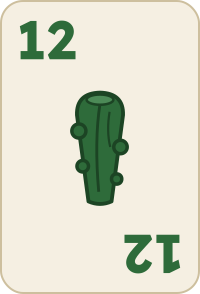
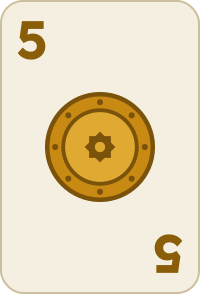
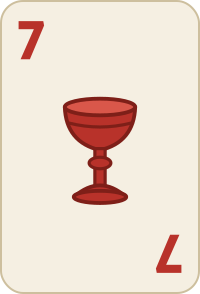
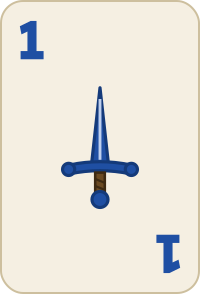
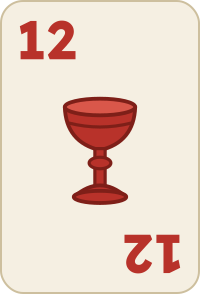
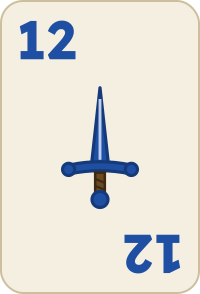
What do you know now? Only one 12 is unseen (4 − 2 − 1). It is in your opponent's hand or still in the deck. If you leave your 12 in the center, at most one card in the whole round can hit it.
When you reach four 12s correctly three rounds in a row, add the 1s, the other rank that matters on the dealer's last turn. Then a third rank, and so on.
Drill 2: the ranks in your hand
Each time you receive a new packet, run the formula for every card in your hand. It takes a few seconds and tells you which of your cards are safe and which are risky.
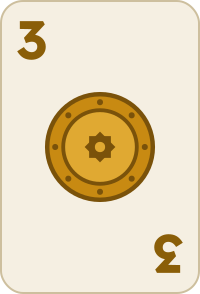
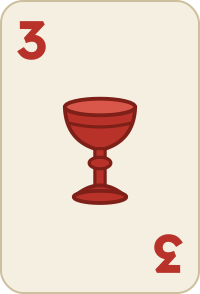
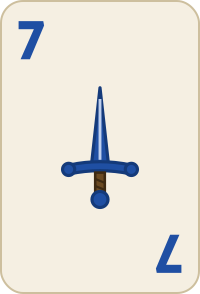
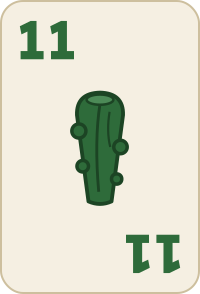
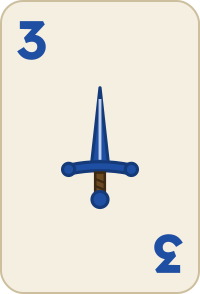
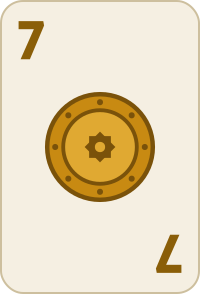
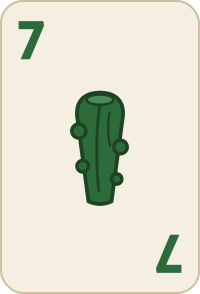
What do you know now?
- 3s: 4 − 1 − 2 = 1 unseen. You also hold a Ronda of 3s: declare it before you play either 3, if you want it.
- 7: 4 − 3 − 1 = 0 unseen. Your 7 is the last one: nobody can hit it. A capture of a lower rank can still take it by run, but that is never a hit.
- 11: 4 − 0 − 1 = 3 unseen. This is the card most likely to be hit if you leave it.
Drill 3: count before you leave a card
When a card captures nothing, it stays in the center, and the next player (always an opponent) can hit it. Before you leave a card, say its unseen count. Zero means no hit is possible. The higher the number, the bigger the risk.
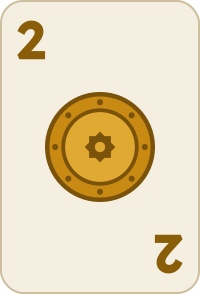
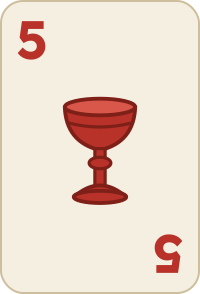
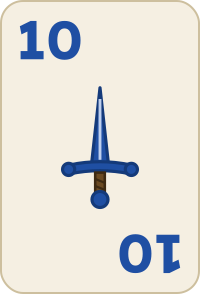
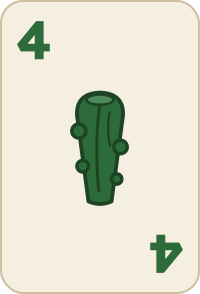
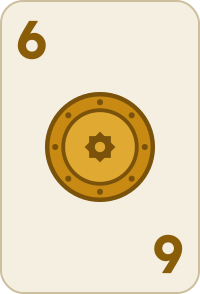
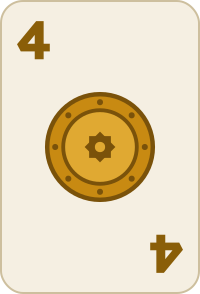
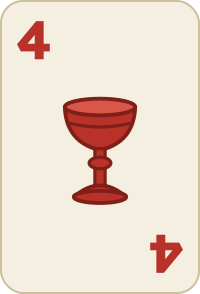
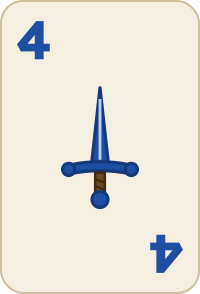
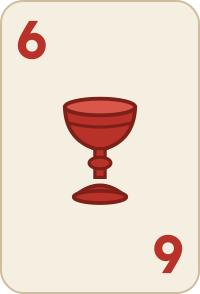
Which card do you leave? The 4. Three 4s are gone and you hold the fourth: 0 unseen, so nobody can hit it. The 6 has 2 unseen, the 12 has 3.
Keep in mind what the number means. In the first packet many unseen cards are still in the deck, so a high count is less dangerous than it looks. In the last packet every unseen card is in someone's hand, so a count of 1 is a real threat.
Drill 4: the last packet of 1 vs 1 is an open book
In a 1 vs 1 game, the deck is empty when the fifth packet is dealt. 32 cards have been played, you hold 4, and your opponent holds the other 4. So every unseen card is in their hand.
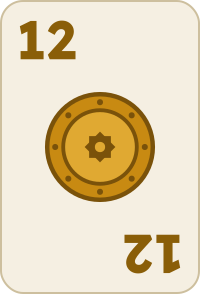
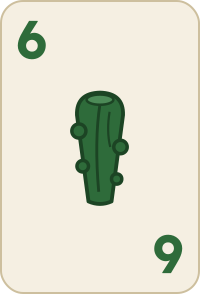
The drill: before the first card of packet 5 is played, name your opponent's four cards. Go through the ranks from 1 to 12 and run the formula on each one. The unseen counts must add up to exactly 4. If they don't, you lost track somewhere.
| Rank | Played | In your hand | Unseen |
|---|---|---|---|
| 1 | 4 | 0 | 0 |
| 2 | 3 | 1 | 0 |
| 3 | 3 | 0 | 1 |
| 4 | 4 | 0 | 0 |
| 5 | 4 | 0 | 0 |
| 6 | 3 | 1 | 0 |
| 7 | 2 | 0 | 2 |
| 10 | 4 | 0 | 0 |
| 11 | 3 | 1 | 0 |
| 12 | 2 | 1 | 1 |
What do you know now?
- Your opponent holds a 3, two 7s and a 12. The played column adds up to 32 and the unseen column to 4, so the count checks out.
- They hold a Ronda of 7s. You hold no pair, so you can't win this packet's pool, and only the team that wins the pool may spot. If they keep it quiet, you can't punish it (unless their team is at 39 or more and yours isn't).
- Your 2, 6 and 11 are the last of their ranks: nobody can hit them.
- Their 12 is the only other 12 left. When they play it, it lands in the center, and nothing can take it away: no other 12 is left to hit it, and no run can reach it (all four 10s are gone and you hold the last 11). Keep your 12 for your last card: it will capture, for 5 points and every card left in the center. If their 12 is the card played just before yours, your capture is also a hit.
In 2 vs 2 the last packet is never a full open book, because the unseen cards are spread over three hands. The same count still tells you which ranks are out, and how many.
Drill 5: read pairs as they are played
Within a packet, nobody draws new cards. So if a player plays two cards of the same rank in the same packet, they held both from the deal: that was a Ronda. Three of a rank was a Tringa.
The drill: for each opponent, keep a short list of the ranks they play in the current packet. Clear it at each new deal. Cards from different packets mean nothing.
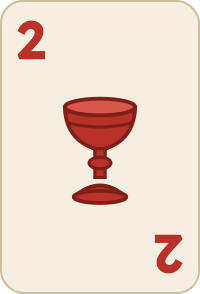
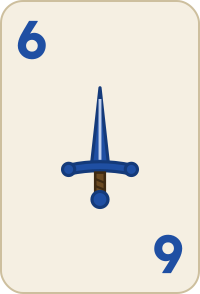
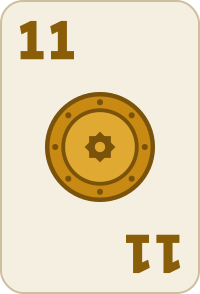
Who do you spot? Opponent A, for a Ronda: they played two 10s, so a correct spot gives your team 1 point. Not for a Tringa: their third card was a 5, and a wrong Tringa spot costs 5. Opponent B played three different ranks, so there is nothing to spot, and a guess would cost a point.
What if your partner hadn't declared? Then nobody won the pool, and nobody may spot. Opponent A's hidden 10s cost them nothing. Remember also that a player who declared can't be spotted, even if they held a second pair.
The app's bots declare whenever they are allowed to, so they rarely leave a pair to spot. Use them to train the read instead: when a bot declares, guess its rank as early as you can. Every card is played by the end of the packet, so you will see the pair and know if you were right.
Drill 6: count toward the dealer's last turn
The dealer's last capture explains the even-count rule: count the cards of a rank that are still in play (in hands, still to be dealt, or in the center, the dealer's own card included). An even number means the dealer's last card of that rank can capture, an odd number means it can't.
The drill is keeping that number live for the 12s all round long. After every capture, ask: did it take an even or an odd number of 12s?
| What happens | 12s captured | 12s still in play | Even or odd |
|---|---|---|---|
| Start of the round | 0 | 4 | even |
| A 12 is played and stays in the center | 0 | 4 | even |
| A player captures an 11, and the run takes the 12 | 1 | 3 | odd |
| A 12 is played, and the next player hits it with a 12 | 3 | 1 | odd |
You deal, and the last 12 is in your final hand. Do you keep it for your last card? No. It is the only 12 still in play, so it has no twin to capture. It can't be hit either, which makes it a safe card to leave earlier in the packet. Keep another rank for the last turn, one with an even count.
Once the 12s feel easy, track every rank in your hand during the last packet the same way.
Drill 7: count the piles for card points
At the end of a round, the team with more than 20 cards scores its total minus 20. Roonda shows each pile's count: count first, then look to check yourself. At a real table, nobody counts for you.
The drill: keep a running count of your team's pile. Add every card of each capture, including the card that captured. You don't need to count the other pile: it is 40 minus your pile, minus the cards in the center, minus the cards still in hands or in the deck.
What does the last card bring? The other team has 40 − 17 − 6 − 1 = 16 cards. The 6 takes the 6 and the run 7, 10, 11: five cards with the one played. The 3 and the 4 left in the center go to the dealer's team, which made the last capture. That makes 24 cards: 4 card points. No dealer bonus, since the capture was made with a 6.
And if the dealer's last card had been one that captures nothing? The other team gets 5 points. If they made the last capture before that, they also take the seven cards in the center: 23 cards, 3 more points. Instead of 4 points for the dealer's team, the other team scores 8. That is what the count lets you see coming.
A practice routine
Learn without a clock first: games against the bots in the Roonda app have no turn timer, so you can count before every card.
- 1 vs 1 against the Easy bot. Drill 1 with the 12s, then the 1s. The Easy bot plays its cards at random and never spots, so your mistakes cost little.
- Still against Easy: drills 2 and 3. Say the unseen count for every card you leave.
- 1 vs 1 against the Normal bot. It remembers every card played in the round, tries not to leave cards you can hit, and spots a pair it has seen played when it's allowed to. Add drill 4: name its last-packet hand every round.
- 2 vs 2 against Normal bots. Drills 5 and 6, with three hands to watch and only three packets.
- Online. Turns last 20 seconds in casual games and 15 in ranked, so the count has to be quick. Add drill 7.
Move to the next step when you get the end-of-round check right three rounds in a row: four of your tracked rank, or the right hand named in packet 5.
Checklist
- At each deal: the unseen count for every card in your hand.
- Before leaving a card: its unseen count. Zero means it can't be hit.
- During each packet: the ranks each opponent plays. A repeated rank without a declaration is a spot, if your team won the pool.
- In 1 vs 1, at the start of packet 5: your opponent's four cards.
- All round: the 12s still in play, even or odd.
- Before the dealer's last turn: your pile, their pile, and what the center is worth.
- At each new round: start again from zero.
Then put it to work with the ideas in Ronda strategy: counting, hits and mind games, and check any detail in the full rules.